Blog

  • Lee County: Data Centers Need a Special Permit Here, and Officials Say No Deal Is in Place

    Lee County: Data Centers Need a Special Permit Here, and Officials Say No Deal Is in Place

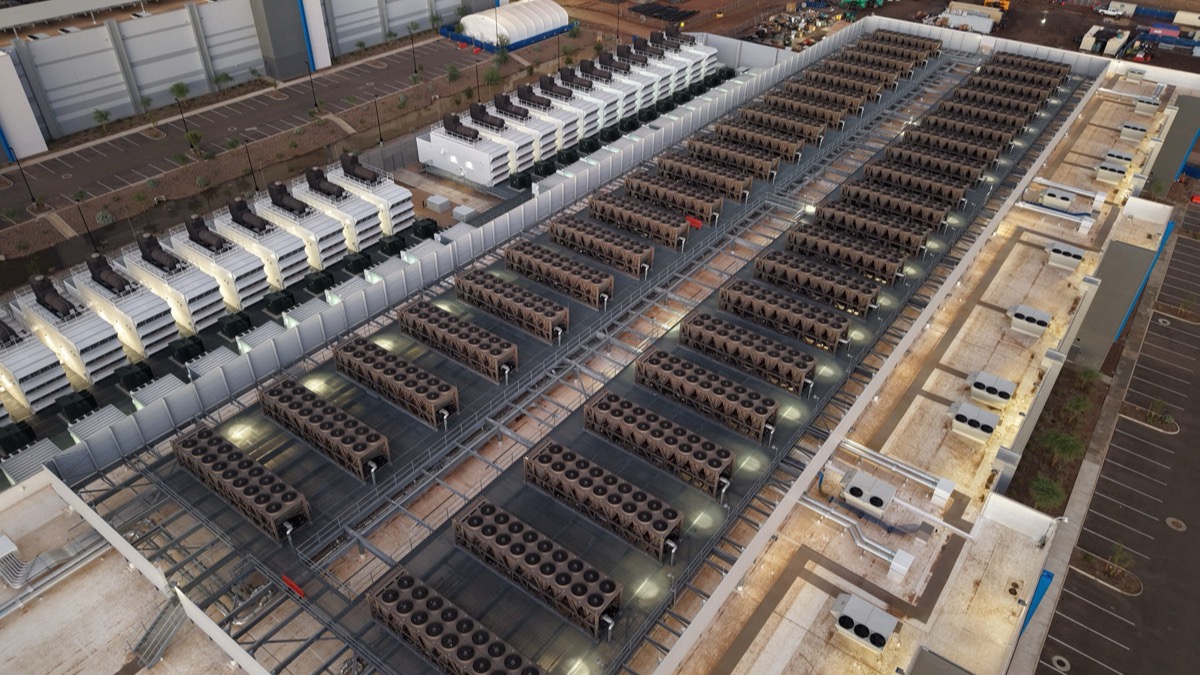
    Rows of cooling units and generators on a data center roof
    Illustrative photo: cooling equipment and backup generators on the roof of a data center. It was not taken in Lee County. Photo: Rsparks3 (CC0), via Wikimedia Commons.

    A data center could only come to Lee County through a special use permit, under a zoning change the Board of Supervisors approved a year ago. Since then, county officials have said at public meetings that no data center deal is in place, while residents have kept asking for a pause or a public vote.

    That is the picture from the board’s own minutes. The Lee Daily Register reviewed them from October 2025 through August 2026, along with the county’s audio recording of the September 15, 2026 meeting.

    The rule the board passed

    On October 21, 2025, the board voted 4 to 1 to change the county’s zoning ordinance. According to the minutes of that meeting, the change added definitions for a data center and for data center mechanical equipment. It also listed data centers as a special use in the county’s two industrial districts, M-1 Limited Industrial and M-2 General Industrial.

    Supervisors Josh Flanary, Mike Kidwell, Brian Shoemaker and Roger Waddell voted yes. D.D. Leonard voted no.

    The planning commission had first advertised data centers as a permitted use in those districts, Clint Carter, then the county’s building inspector and zoning administrator, told the board. After the hearing and phone calls, he said, it was clear the public preferred a special use permit. That process gives people a chance to speak on what comes into their neighborhood. A permitted use would have meant permits issued without further public hearings.

    Carter also said a special use permit would apply to one parcel at a time. In February 2026, as county administrator, he told the board that any such permit would need approval from both the planning commission and the Board of Supervisors.

    What officials have said since

    • October 21, 2025: Asked whether a data center was interested in coming to Lee County, Carter said not to his knowledge. Then-County Administrator Robby Wright said there is a special tax rate for data centers. It applies only to the computer equipment inside them, he said, and everything else is taxed at the standard rate.
    • February 17, 2026: Carter said that “at this point there is no data center coming,” according to the minutes. Flanary said the county was not in talks with anyone. Kidwell answered a resident’s question about putting data centers on the ballot with no.
    • April 21, 2026: Leslie Litton, director of the county’s Economic Development Authority, said she wanted to “put certain rumors to rest.” The minutes record her saying that Lee County does not have a deal for a data center and is not building an access road for one.

    The road Litton described is a gravel road at the Constitutional Oaks site. She said its purpose is to finish environmental studies and raise the site’s rating with the Virginia Economic Development Partnership, which would make it easier to market. She said the EDA’s main focus is developing the county’s industrial park, which is rated tier 2 and aimed at light manufacturing. She is also working to have the road paid for entirely by grants rather than local money, she said.

    What residents have asked for

    The question has come up again and again during public comment. At the October 2025 hearing, a Jonesville resident asked for a two-year moratorium, saying nearby areas were taking that step. In May 2026, another speaker said a ten-year moratorium would be a better choice and that citizens should get to vote on any data center.

    Speakers at the July 21, 2026 meeting raised the cost of electricity, the water supply, jobs and transparency, and again asked for a ballot question. At the September 15 meeting, according to the county’s audio recording, a resident urged the board to adopt a moratorium or let residents vote.

    The board’s minutes through August 18, 2026 do not record a vote on a moratorium or on a ballot question. They also do not show a data center permit request coming before the board.

    How a project would have to be approved

    Under the 2025 rule, a data center would need land zoned M-1 or M-2, and then a special use permit for that specific parcel. That means public hearings before the planning commission and the Board of Supervisors, where neighbors can speak.

    That land is limited, according to Carter. At the 2025 hearing, he said there are “not that many parcels” zoned M-1 and M-2, and that much of that land is already developed for the uses it was zoned for.
  • Lee County: Shelter Sent 560 Dogs to Rescue Groups Last Year, State Records Show

    Lee County: Shelter Sent 560 Dogs to Rescue Groups Last Year, State Records Show

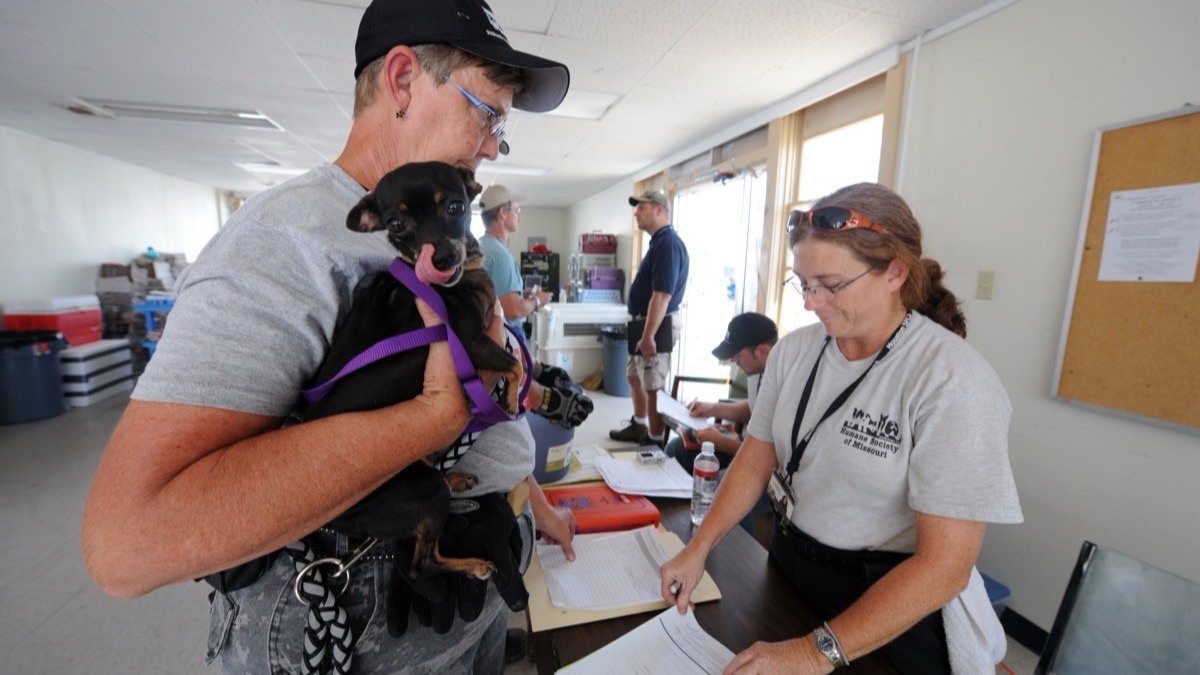
    A volunteer holding a puppy at a shelter check-in desk
    Illustrative photo: a volunteer holds a dog being checked in at a temporary shelter in Galveston, Texas, in 2008. It was not taken in Lee County. Photo: Jocelyn Augustino/FEMA (public domain), via Wikimedia Commons.

    Most dogs that pass through the Lee County animal shelter leave on a transfer to a rescue group. In 2025, the county’s shelter took in 721 dogs and sent 560 of them, nearly 78%, to rescue organizations elsewhere in Virginia, according to the annual report it filed with the state.

    Ten dogs were euthanized that year. That is about 1.4% of the dogs the shelter handled.

    Virginia shelters file these reports each year with the Virginia Department of Agriculture and Consumer Services, and the numbers are reported by the shelters themselves. The Lee Daily Register pulled the county’s reports for 2021 through 2025 and compared 2025 with the state’s summary for all public shelters.

    Where the dogs came from

    The county’s 2025 report lists these reasons for custody:

    • Surrendered by their owners: 356
    • Strays: 328
    • Seized: 29
    • Held for bite-case quarantine: 8

    Owner surrenders made up almost half of the intake. Across Virginia’s public shelters, surrenders were about 32% of the dogs taken in during 2025, based on the state’s summary of public animal shelters.

    The Lee County reports list no cats in any of the five years. The intake policy the county filed with the state describes a pound for dogs and for farm animals that are seized, abandoned or running loose.

    Where they went

    Of the 721 dogs in 2025, 560 were transferred, 91 were reclaimed by their owners and 55 were adopted. Ten were euthanized and five died in custody. None were still at the shelter on December 31.

    The report names four groups that took dogs from Lee County that year: Paws of Southwest Va. in Coeburn, the Winchester SPCA, Homeward Trails in Arlington and Lost Dog and Cat in Chantilly.

    That pattern is very different from the state as a whole. Across Virginia’s public shelters in 2025, about 23% of dogs were transferred, about 30% were adopted, about 28% went back to their owners, and about 12% were euthanized.

    Five years of reports

    Intake has held steady at a little over 700 dogs a year since 2023. Here is what the county reported each year:

    YearDogs handledTransferredEuthanized
    202157942112
    202266652822
    202372354231
    202471754713
    202572156010
    Source: Lee County’s annual animal custody reports to the Virginia Department of Agriculture and Consumer Services. “Dogs handled” includes dogs already at the shelter on January 1. The 2023 transfers include 23 sent to an out-of-state group.

    Over the five years, the shelter handled 3,406 dogs, transferred 2,598 and euthanized 88. The highest euthanasia count was 31, in 2023, the same year 21 dogs died in custody. The 2023 report gives no explanation for either number.

    What the county has spent

    The county budget for animal control rose this year. The appropriation is $269,924 for 2026-27, up from $207,735 in 2025-26, according to the board’s June 29, 2026 and June 25, 2025 minutes. The minutes do not break down the increase.

    Smaller items have come before the Board of Supervisors too. In January 2025, the board approved $2,901.68 for materials to repair shelter pens that then-County Administrator Robby Wright said were in disrepair. The money came from a $4,630.55 donation that Eastman made for the shelter in the 2023-24 fiscal year, and shelter staff were to do the repairs, according to the January 21, 2025 minutes.

    A month later, according to the February 18, 2025 minutes, the board voted to add the animal control and litter control office to the sheriff’s body camera program, at $13,837.57 over five years. On May 5, 2026, the board agreed to take applications for a pool of candidates, if needed, for a full-time animal control officer.

    The shelter’s listed contact in the state reports is Lee County Animal Control, P.O. Box 367, Jonesville, at (276) 346-7710.

  • Lee County: Real Estate Tax Rate Stays at 69 Cents, One Year After a Split Vote

    Lee County: Real Estate Tax Rate Stays at 69 Cents, One Year After a Split Vote

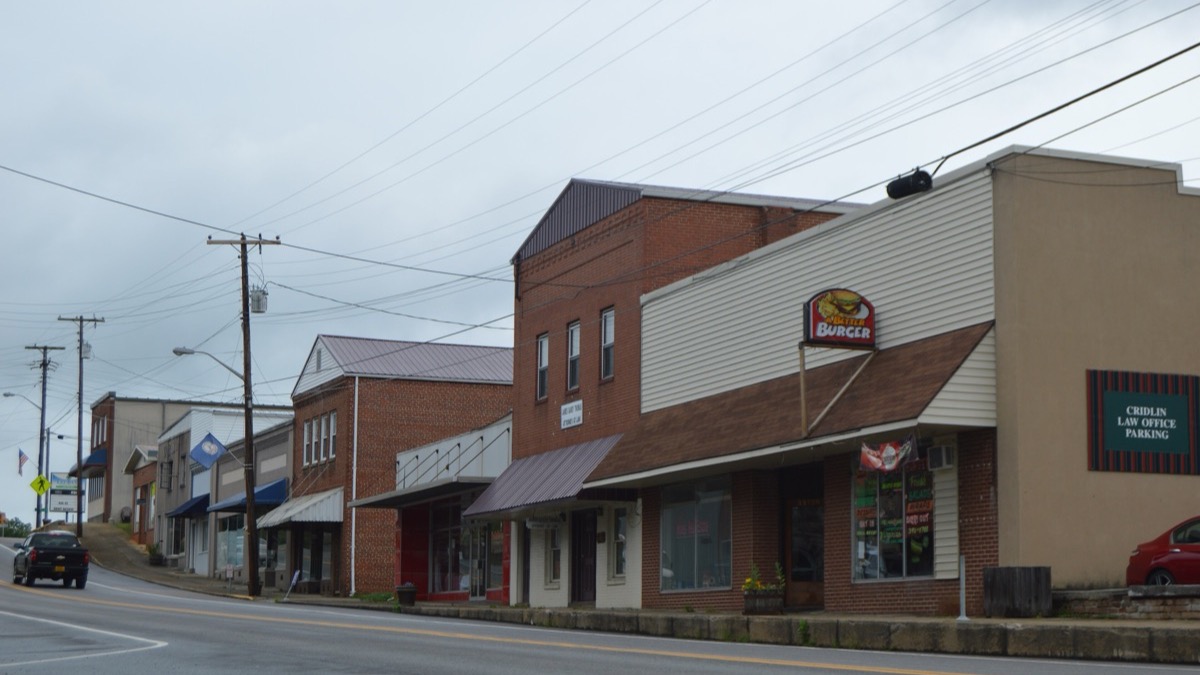
    Storefronts on Main Street in Jonesville, Virginia
    Main Street in downtown Jonesville, the Lee County seat, in 2017. Photo: Nyttend (public domain), via Wikimedia Commons.

    Lee County property owners are paying the same real estate tax rate this year as last year: 69 cents for every $100 of assessed value. A year ago, that rate split the Board of Supervisors 3 to 2. This summer, it passed 5 to 0.

    The Lee Daily Register compared the board’s minutes from both budget seasons. The other tax rates did not change either, and the budget hearing that drew many speakers in 2025 drew none in 2026.

    The rates for 2026-27

    The board adopted these rates on June 29, 2026, according to the minutes of that meeting. Each is per $100 of assessed value.

    • Real property: $0.69
    • Personal property and business personal property: $1.95
    • Machinery and tools: $2.00
    • Merchants’ capital: $1.41
    • Aircraft: $0.10
    • Mobile homes: $0.69 (after a July correction, explained below)

    At 69 cents, a home assessed at $100,000 owes $690 a year in county real estate tax. A home assessed at $150,000 owes $1,035.

    Why 69 cents was a fight in 2025

    The 69-cent rate first came with the county’s 2025 reassessment, its first in years. A tax notice read into the minutes of the June 25, 2025 meeting laid out the numbers:

    • Total assessed value of real property had risen 46.06% over the year before, not counting new construction or improvements.
    • A rate of $0.515 would have raised the same real estate tax as the year before.
    • The proposed 69 cents was $0.175 above that, an “effective tax rate increase” of 33.98%.

    The old rate had been 74 cents, then-County Administrator Robby Wright told a resident at that hearing. He said the county’s last completed assessment had been in 2016. Brian Hogan, a District 3 resident, summed up the result: the rate was going down, he said, but people would be paying much more tax.

    The levies passed that night 3 to 2. Josh Flanary, D.D. Leonard and Roger Waddell voted yes. Mike Kidwell and Brian Shoemaker voted no. The board then adopted a $101,649,644 budget for 2025-26 by the same 3 to 2 split.

    A quiet hearing this year

    The 2026 public hearing on the budget was held June 18. According to the minutes, the advertised budget totaled $89,624,563, and “there was no public comment.”

    On June 29, all five supervisors voted for the rates, for a $90,651,204 budget and for the appropriations. Clint Carter, now the county administrator, said balancing it would take a $3,806 transfer from reserves. He also said $78,354 would be set aside for future opioid abatement projects.

    The budget is smaller than last year’s on paper. Comparing this year’s advertised budget with the one in the June 17, 2025 minutes, most of the gap is in two lines: capital projects fell from $7,010,000 to $2,975,000, and the estimate of federal, state and other school money fell from $53,795,875 to $46,169,483. The school estimate was made before the state budget was final, and the board raised the school appropriation twice over the summer.

    Two fixes over the summer

    The county adopted its budget before the state finished its own. Carter told the board on July 21 that the state did not finalize its budget until the last week of June, so the county had worked from its best information.

    That July meeting also fixed the mobile home rate. The levies adopted in June, like those in 2025, had listed mobile homes at 74 cents. Carter said it should have been 69 cents. According to the July 21 minutes, he said the Treasurer’s and Commissioner of the Revenue’s offices had handled it correctly under state code for the past fiscal year, and the board re-adopted the levies at 69 cents for the public’s understanding. The vote was 5 to 0.

    Carter put the final budget at $91,059,580 that night. The appropriation resolution printed in the same minutes totals $90,691,570.

    The second fix was for school security. On August 18, the board added $1,877,156 to the school budget: $1,535,326 in state money that needed a $341,830 local match. The August 18 minutes say the Department of Criminal Justice Services had told the school board on July 15 that it would not renew the grant for school security officers at the elementary and middle schools.

    To keep those officers, the school board agreed to dissolve its Capital Reserve Fund and return the money to the county’s general fund, Carter said. That let the supervisors fund the larger package. Nobody spoke at the public hearing, and the vote was 5 to 0. The school appropriation rose from $53,417,201 to $55,294,357.

    An idea for taxing big landholdings

    The same August meeting heard a pitch to change who carries the tax load. Adam Malle of the Clinch Coalition, which is working with the Appalachian Citizens’ Law Center and Appalachian Voices, asked the board to support state legislation that would let coal counties create a separate tax class for large land holdings.

    Citing a land-ownership tool developed by the University of Tennessee and Open Grid Data, Malle said more than 8.5% of Lee County’s 272,957 acres is owned by 10 landowners. Much of that land was assembled for mining, he said, and is now assessed low because there are few comparable sales, which pushes more of the tax onto residents and businesses. The August minutes record his request but no vote on it.

  • Pennington Gap: Tobacco Festival Weekend Brings Cledus T. Judd, a 5K and the 3 p.m. Parade

    Pennington Gap: Tobacco Festival Weekend Brings Cledus T. Judd, a 5K and the 3 p.m. Parade

    Morgan Avenue in downtown Pennington Gap, Virginia
    Morgan Avenue in downtown Pennington Gap, one of the streets the festival organizers say is closed during the event, in 2017. Photo: Nyttend (public domain), via Wikimedia Commons.

    The Lee County Tobacco Festival fills downtown Pennington Gap on Saturday, October 24. The weekend opens the night before, when country comedian Cledus T. Judd plays Lee Theatre on Friday, October 23, at 7 p.m.

    The festival dates to 1949 and is held on the fourth Saturday of October, according to its organizers, the nonprofit Friends of the Tobacco Festival. They call it the longest-running tobacco festival in Virginia and Lee County’s oldest annual parade.

    Saturday’s schedule

    These times come from the festival’s website as of October 19.

    • 8:30 a.m. One-mile fun run
    • 9 a.m. Lee County Heritage 5K road race
    • 10 a.m. Butch Williams on stage
    • 10:45 a.m. Checkered Past
    • 11:15 a.m. Milkshake (ages 6 to 13) and pie-eating (ages 14 and up) contests
    • Noon Zach Wiles and Jacob Sturgill
    • 1 p.m. Country Cabin Line Dancers
    • 1:45 p.m. Huff & Co. live music
    • 3 p.m. Parade, from Pennington Middle School to Lee Bank
    • 7 p.m. Lee Haw Comedy Show at Lee Theatre

    Where things are, and which roads close

    Crafters line Main Street. Food vendors and the stage are in the Pennington Pharmacy parking lot, and the bounce houses are behind the Verizon building, the organizers say.

    Drivers should plan around the closures. During the festival, Morgan Avenue (the East/West Alternate 58-421 route through town), South Kentucky Street and Main Street are closed. The organizers do not list exact closing and reopening times.

    If you are in the parade

    Entries meet in the Pennington Middle School parking lot. Floats that want to be judged must be in line by 2 p.m.

    The parade entry form sets a few rules:

    • Entry is free, except for political candidates, who pay $25 per candidate per car or float.
    • Candy may be handed out but not thrown from floats.
    • No amplifiers or loudspeakers on floats.
    • ATV, UTV and dirt bike riders must wear a helmet and follow traffic rules.

    The 5K and the Friday show

    Both races start at Pennington Middle School, 121 Bobcat Circle. The 2026 entry form lists a $15 fee for all participants and promises shirts to registered walkers and runners, with the first 100 guaranteed a shirt on race day. Awards go to the top male and female finishers overall, the top masters runners age 40 and up, and the top three in each age group. The form’s information line is 276-546-1210.

    The Friday show is sponsored by Friends of the Tobacco Festival, according to the Town of Pennington Gap’s event page, which lists it from 7 to 9 p.m. The town’s online presale page showed tickets at $15.90 on October 19, with the final total calculated at checkout.

    A festival for a crop that is still grown here

    The festival began as a celebration of the tobacco harvest, and Lee County farmers still grow the crop. In the U.S. Department of Agriculture’s most recent Census of Agriculture county profile, from 2022, tobacco ranks third among the county’s crops by acreage, behind hay and corn for grain. The census withholds the exact acreage and sales “to avoid disclosing data for individual operations.”

    Lee County ranked 17th in tobacco sales among the 25 Virginia counties that produced it in 2022. Five years earlier, the 2017 profile put the county’s tobacco sales at $386,000. Farming overall has shrunk. The county had 629 farms in 2022, down from 830 in 2017.

    The county is backing the weekend too. At its September 15 meeting, the Board of Supervisors voted to renew its $300 featured sponsorship of the festival, according to the county’s audio recording. Questions about the festival go to the organizers at (276) 346-7836.

  • Lee County: Hospital Not on State’s Closure-Risk Lists as Ballad Lands $2 Million Network Grant

    Lee County: Hospital Not on State’s Closure-Risk Lists as Ballad Lands $2 Million Network Grant

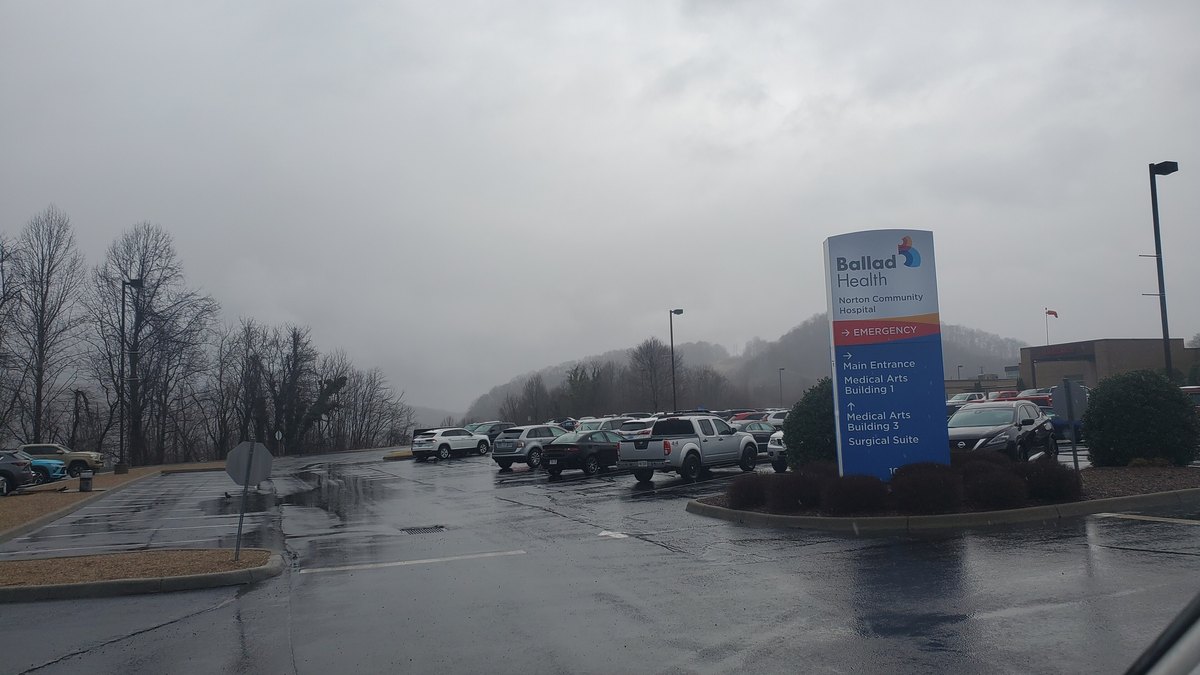
    Ballad Health sign at Norton Community Hospital in Norton, Virginia
    Norton Community Hospital in February 2022. It is one of three Ballad Health hospitals, with Lee County and Lonesome Pine, named in the grant. Photo: JBTHEMILKER, CC BY-SA 4.0, via Wikimedia Commons.

    Lee County Community Hospital in Pennington Gap is not on any of the risk lists in a June 2026 state report on the finances of Virginia’s rural hospitals. The hospital was in the news last fall, when coverage described it as one of six in Virginia vulnerable to closure because of federal Medicaid changes.

    The report by the Joint Commission on Health Care, a commission in the legislative branch of state government, mentions the hospital once in its text, in a history of rural closures: “Lee County Community Hospital closed in 2013 and later reopened in 2021 under a limited-service model, restoring emergency and outpatient care but not full inpatient capacity.”

    There is also new money for the hospital’s technology. It is one of three hospitals in the region that a $2 million grant to Ballad Health will connect more closely to Ballad’s regional command center.

    Who is on the state’s lists

    Commission staff measured risk in two ways. Using factors that the Center for Healthcare Quality and Payment Reform links to closures, the staff found 13 hospitals at risk or at immediate risk of closure. A second model, the Sheps Center’s financial distress index, puts 12 at the highest or mid-highest risk of financial distress. Seven hospitals fall in the top category of at least one of the two.

    Several of those hospitals are elsewhere in Southwest Virginia. Ballad’s Dickenson Community Hospital and Smyth County Community Hospital are listed as at risk of closure. Carilion Tazewell Community Hospital is at immediate risk of closure and at the highest risk of distress. Buchanan General Hospital is at mid-highest risk of distress.

    Lee County Community Hospital is not on any of those lists. Besides the passage about its closure and reopening, its name appears only in the report’s appendix data tables.

    Why the hospital has been watched

    The warning last fall came during a visit by then-candidate Abigail Spanberger in October 2025. Cardinal News reported that hospital administrator Cindy Elkins said 75% of the hospital’s patients depend on Medicaid or Medicare.

    The same article called it one of six Virginia hospitals considered vulnerable to closure because of the federal Medicaid changes. The article does not name the source of that count.

    The hospital has closed once before. Citing Ballad Health, Cardinal News reported that it shut down in 2013 after insurance reimbursement cuts and a lack of consistent physician coverage. The community then won General Assembly legislation that created a hospital authority, and the authority acquired the building. Ballad reopened the hospital in 2021.

    What the $2 million grant pays for

    The grant was part of a round announced on October 2, 2026. That day, the Virginia Health Care Foundation announced 25 awards totaling $14.39 million through Virginia’s Rural Health Transformation Program. The program is paid for by a federal award of $189,544,888.14 from the Centers for Medicare & Medicaid Services.

    Ballad Health received $2 million “to upgrade the networks and communication tools connecting Norton Community, Lee County, and Lonesome Pine hospitals with its regional command center, expanding telemedicine services,” according to the foundation’s announcement.

    Screening day on October 28

    Patients in Lee County also have a date to note this month. Ballad’s mobile mammography unit, which offers 3-D mammography, is scheduled to stop at Lee County Community Hospital, 127 Healthcare Dr., Pennington Gap, on Wednesday, October 28, from 9 a.m. to 4 p.m.

    That schedule was published by WCYB on October 12. The listing does not say whether appointments are needed, so patients may want to call the hospital first.

    The hospital authority that owns the building was also scheduled to meet at the hospital on October 15, according to a Lee County public notice. The notice says meeting materials can be requested from the authority’s listed contact.

  • Lee County: Supervisors to Hear From College Promise Program on Tuesday

    Lee County: Supervisors to Hear From College Promise Program on Tuesday

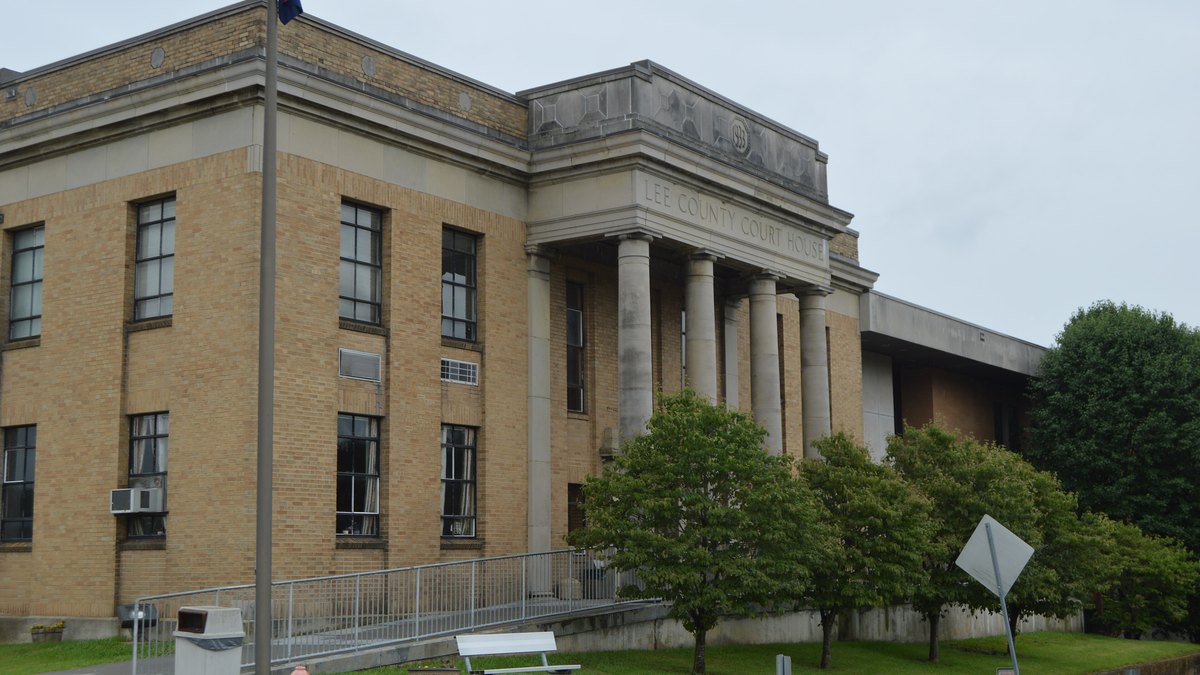
    Front of the Lee County Courthouse in Jonesville, Virginia
    The Lee County Courthouse in Jonesville, where the Board of Supervisors meets, in 2017. Photo: Nyttend (public domain), via Wikimedia Commons.

    The president of Mountain Empire Community College is scheduled to speak to the Lee County Board of Supervisors on Tuesday, October 20. The topic is the college’s Promise Program, which lets local high school graduates attend tuition-free.

    The board’s August 18 minutes also list a Mountain Empire Community College update with a two-word note: “Not Present.”

    Tuesday’s regular meeting starts at 6 p.m. in the General District Courtroom on the third floor of the Lee County Courthouse in Jonesville. The posted agenda lists Dr. Kristen Westover, the college’s president, under delegations.

    What the Promise Program covers

    The program started with the class of 2023. According to the college’s program page, graduates of a public school or recognized home association in Lee, Scott, Wise or Dickenson counties or the City of Norton can attend MECC tuition-free.

    It is a “last dollar” scholarship for tuition only. Federal aid, state aid and other scholarships are applied first, and the program does not cover books.

    Students have to keep up their end. They must hold a 2.0 grade point average each semester and overall, stay enrolled full time without a break and meet Virginia residency rules. They must also file the FAFSA and the MECC Foundation scholarship application by August 1 each year.

    Lee County’s part in it so far

    Public records show how the county joined in. In late 2022, the college was still asking local governments for help. The minutes of the college’s local advisory board from November 15, 2022 say Norton, Wise and Scott had indicated they planned to help close the tuition gap for their graduates. Westover, those minutes say, planned “to reach back out to Lee County as they begin to build their budget.”

    By the next summer, the program was in the county budget. The minutes of a June 20, 2023 budget discussion record a question about whether the MECC Promise was in the budget, and the answer “yes.” A list of budget changes at the June 28, 2023 recessed meeting includes “Adjusted MECC Promise Program to correct amount.”

    A college official updated the board on February 20, 2024. According to the minutes, MECC had received a $750,000 grant to start the program and had asked each local board of supervisors for a donation. About 50 students from Lee County attended MECC in 2022, the minutes say, and about 45 that year.

    The same minutes record that “$40,000.00 from last year has not been spent and will carry over for the next year.” They do not say whose money the $40,000 was, and the October agenda does not say whether the college will ask the board for money this time.

    Also on Tuesday’s agenda

    • Supplemental appropriations for the Commonwealth’s Attorney’s office
    • Quotes from East Tennessee Sprinkler Co. and Johnson Controls, and a proposal from Germa Kleen
    • A personal property tax exemption request from Air Mobile Ministries
    • A resolution on county credit cards
    • Appointments to nine boards, including the Board of Zoning Appeals, the Dryden Water Authority, Social Services and the Tourism Committee

    Residents can address the board during public expression. The agenda also allows for an optional executive session, and the board will be asked to approve the minutes of its two September 15 meetings.

    What the board did on September 15

    Those September minutes have not been approved yet. So this account of the September 15 regular meeting comes from the county’s audio recording, which The Lee Daily Register reviewed.

    The board passed a resolution for the school division’s $8,694,742 in carryover funds. The September agenda describes that money as textbook funds and state direct aid that need no added local match.

    Supervisors also approved Joseph Schrock’s special use permit for a dry kiln and woodworking business in the Flatwoods community. The approval came with the conditions the planning commission had recommended.

    The board took no action on two zoning changes. One would have redefined campgrounds, and the other would have removed the county’s recreational vehicle park rules. Neither drew a motion when it came up. Near the end of the meeting, when the RV item was raised again, a board member said the board’s consensus was not to take any action on it.

    During public comment, a resident urged the board to adopt a moratorium on data centers or let county voters decide. The board also voted to renew its $300 featured sponsorship of the Lee County Tobacco Festival, set for October 24. After a closed session, it voted to advertise for an assistant county administrator and an Economic Development Authority director.

  • Pennington Gap: Water Plant’s Chlorine Monitor Back in Service After Rule Violation

    Pennington Gap: Water Plant’s Chlorine Monitor Back in Service After Rule Violation

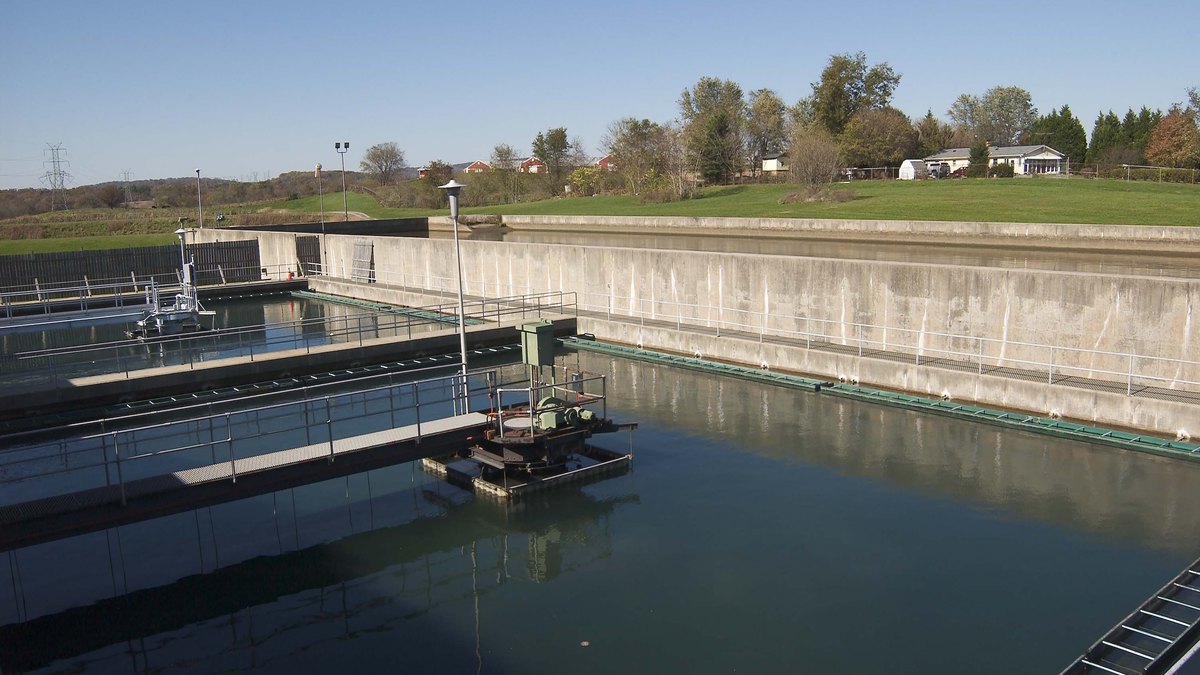
    Filtration basins at a drinking water treatment plant
    Illustrative image: filtration basins at a drinking water treatment plant, not the Pennington Gap waterworks. Photo: U.S. Environmental Protection Agency (public domain), via Wikimedia Commons.

    Pennington Gap’s waterworks violated a drinking water regulation when its continuous chlorine analyzer went out of service, the town told customers in a notice distributed on October 15, 2026. The analyzer keeps a running reading of the chlorine in treated water. The town says the problem was not an emergency and no one needs to boil water.

    According to the notice on the town’s website, the waterworks learned on September 29, 2026, that the analyzer was out of service. It went back into service on October 8. That was nine days after the town received word of the problem.

    What the town told customers

    The one-page notice is titled “Inoperative Continuous Chlorine Analyzer.” Its advice is short: “There is nothing you need to do.” Anyone with specific health concerns should talk to their doctor.

    Some people may face more risk, the notice adds. It names people with severely weakened immune systems, infants, pregnant women and older adults, and it tells them to ask their health care providers about drinking the water.

    The town also explains why customers are hearing about this now and not within hours. “This is not an emergency,” the notice says. “If it had been, you would have been notified within 24 hours.”

    The town says it is working with field staff from Virginia’s Office of Drinking Water. It is also moving ahead with an application to bring the waterworks back into compliance, and it expects to resolve the problem within 15 days.

    Why the chlorine reading matters

    Chlorine is added to drinking water to kill germs. Enough of it has to stay in the water as it moves through the pipes. That is why Virginia makes waterworks that draw and filter surface water track the chlorine level without a break.

    The rule is 12VAC5-590-376. It says the chlorine level of water entering the distribution system “shall be monitored continuously.” The lowest and highest readings must be recorded each day.

    The same rule plans for broken equipment. If a continuous monitor fails, the waterworks must take a grab sample, a single sample collected by hand, every four hours instead. It can do that for no more than five working days after the failure.

    Smaller systems have another option. Those serving 3,300 people or fewer may take grab samples on a set daily schedule. For a system serving 1,000 to 2,500 people, the rule’s table calls for three a day.

    The town’s notice does not say which part of the rule was missed. It also does not say whether grab samples were taken while the analyzer was down, or what the chlorine readings were.

    Who gets this water

    Federal records describe the Pennington Gap waterworks, state system ID 1105500, as a community water system that draws on surface water. The U.S. Environmental Protection Agency’s drinking water database lists it as serving 1,781 people through 972 service connections.

    The EPA’s compliance report for the system shows two earlier problems in 2025, both resolved. In January, the system had a treatment technique violation and a reporting violation under the Revised Total Coliform Rule, which deals with testing for bacteria. Both are marked resolved on January 30, 2025.

    Starting February 27, the system had two violations of the Public Notice Rule. Both were resolved on March 31, 2025. The EPA data behind the report was last updated on October 7, 2026, and does not yet show the chlorine analyzer outage.

    Questions and sharing the notice

    The notice lists Chris Sexton as the contact for questions, at 528 Industrial Drive in Pennington Gap or (276) 546-2234.

    It also asks customers to pass the information on. Some people who drink the water may not have received the notice directly, it says, such as residents of apartments and nursing homes, and people at schools and businesses.

    By the time the notice went out, the analyzer had been running again for a week.