

Author: Rahis Saifi

  • Lee County: Supervisors to Hear From College Promise Program on Tuesday

    Lee County: Supervisors to Hear From College Promise Program on Tuesday

    Front of the Lee County Courthouse in Jonesville, Virginia
    The Lee County Courthouse in Jonesville, where the Board of Supervisors meets, in 2017. Photo: Nyttend (public domain), via Wikimedia Commons.

    The president of Mountain Empire Community College is scheduled to speak to the Lee County Board of Supervisors on Tuesday, October 20. The topic is the college’s Promise Program, which lets local high school graduates attend tuition-free.

    The board’s August 18 minutes also list a Mountain Empire Community College update with a two-word note: “Not Present.”

    Tuesday’s regular meeting starts at 6 p.m. in the General District Courtroom on the third floor of the Lee County Courthouse in Jonesville. The posted agenda lists Dr. Kristen Westover, the college’s president, under delegations.

    What the Promise Program covers

    The program started with the class of 2023. According to the college’s program page, graduates of a public school or recognized home association in Lee, Scott, Wise or Dickenson counties or the City of Norton can attend MECC tuition-free.

    It is a “last dollar” scholarship for tuition only. Federal aid, state aid and other scholarships are applied first, and the program does not cover books.

    Students have to keep up their end. They must hold a 2.0 grade point average each semester and overall, stay enrolled full time without a break and meet Virginia residency rules. They must also file the FAFSA and the MECC Foundation scholarship application by August 1 each year.

    Lee County’s part in it so far

    Public records show how the county joined in. In late 2022, the college was still asking local governments for help. The minutes of the college’s local advisory board from November 15, 2022 say Norton, Wise and Scott had indicated they planned to help close the tuition gap for their graduates. Westover, those minutes say, planned “to reach back out to Lee County as they begin to build their budget.”

    By the next summer, the program was in the county budget. The minutes of a June 20, 2023 budget discussion record a question about whether the MECC Promise was in the budget, and the answer “yes.” A list of budget changes at the June 28, 2023 recessed meeting includes “Adjusted MECC Promise Program to correct amount.”

    A college official updated the board on February 20, 2024. According to the minutes, MECC had received a $750,000 grant to start the program and had asked each local board of supervisors for a donation. About 50 students from Lee County attended MECC in 2022, the minutes say, and about 45 that year.

    The same minutes record that “$40,000.00 from last year has not been spent and will carry over for the next year.” They do not say whose money the $40,000 was, and the October agenda does not say whether the college will ask the board for money this time.

    Also on Tuesday’s agenda

    • Supplemental appropriations for the Commonwealth’s Attorney’s office
    • Quotes from East Tennessee Sprinkler Co. and Johnson Controls, and a proposal from Germa Kleen
    • A personal property tax exemption request from Air Mobile Ministries
    • A resolution on county credit cards
    • Appointments to nine boards, including the Board of Zoning Appeals, the Dryden Water Authority, Social Services and the Tourism Committee

    Residents can address the board during public expression. The agenda also allows for an optional executive session, and the board will be asked to approve the minutes of its two September 15 meetings.

    What the board did on September 15

    Those September minutes have not been approved yet. So this account of the September 15 regular meeting comes from the county’s audio recording, which The Lee Daily Register reviewed.

    The board passed a resolution for the school division’s $8,694,742 in carryover funds. The September agenda describes that money as textbook funds and state direct aid that need no added local match.

    Supervisors also approved Joseph Schrock’s special use permit for a dry kiln and woodworking business in the Flatwoods community. The approval came with the conditions the planning commission had recommended.

    The board took no action on two zoning changes. One would have redefined campgrounds, and the other would have removed the county’s recreational vehicle park rules. Neither drew a motion when it came up. Near the end of the meeting, when the RV item was raised again, a board member said the board’s consensus was not to take any action on it.

    During public comment, a resident urged the board to adopt a moratorium on data centers or let county voters decide. The board also voted to renew its $300 featured sponsorship of the Lee County Tobacco Festival, set for October 24. After a closed session, it voted to advertise for an assistant county administrator and an Economic Development Authority director.
  • Pennington Gap: Water Plant’s Chlorine Monitor Back in Service After Rule Violation

    Pennington Gap: Water Plant’s Chlorine Monitor Back in Service After Rule Violation

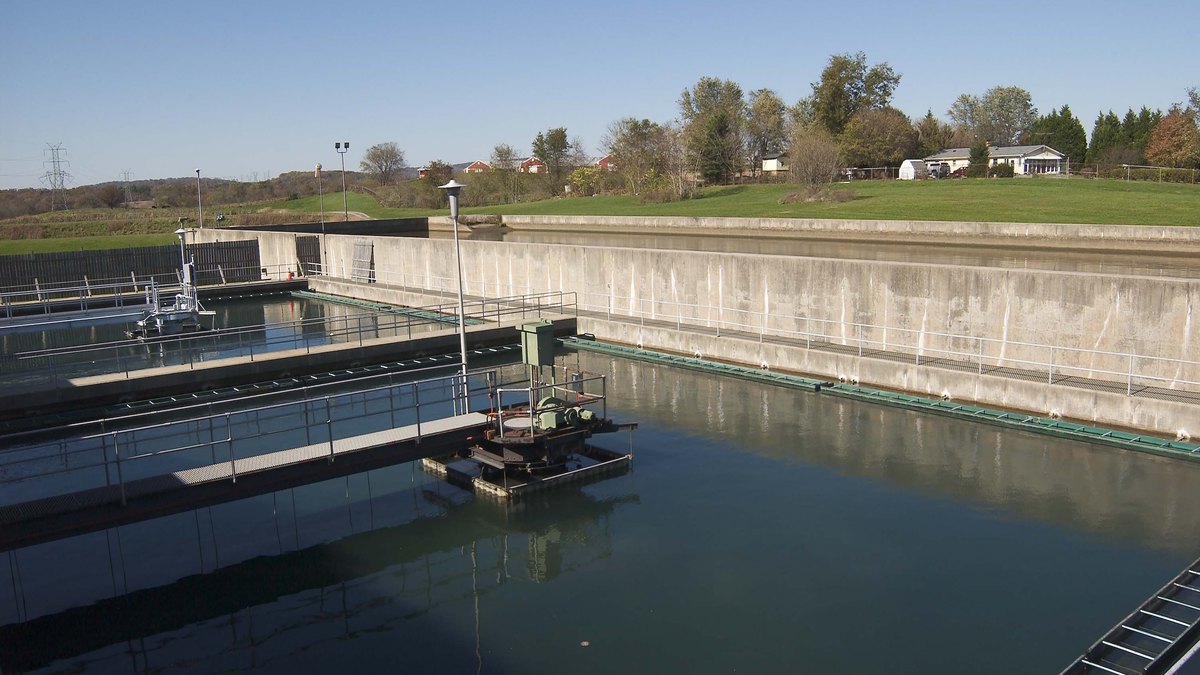
    Filtration basins at a drinking water treatment plant
    Illustrative image: filtration basins at a drinking water treatment plant, not the Pennington Gap waterworks. Photo: U.S. Environmental Protection Agency (public domain), via Wikimedia Commons.

    Pennington Gap’s waterworks violated a drinking water regulation when its continuous chlorine analyzer went out of service, the town told customers in a notice distributed on October 15, 2026. The analyzer keeps a running reading of the chlorine in treated water. The town says the problem was not an emergency and no one needs to boil water.

    According to the notice on the town’s website, the waterworks learned on September 29, 2026, that the analyzer was out of service. It went back into service on October 8. That was nine days after the town received word of the problem.

    What the town told customers

    The one-page notice is titled “Inoperative Continuous Chlorine Analyzer.” Its advice is short: “There is nothing you need to do.” Anyone with specific health concerns should talk to their doctor.

    Some people may face more risk, the notice adds. It names people with severely weakened immune systems, infants, pregnant women and older adults, and it tells them to ask their health care providers about drinking the water.

    The town also explains why customers are hearing about this now and not within hours. “This is not an emergency,” the notice says. “If it had been, you would have been notified within 24 hours.”

    The town says it is working with field staff from Virginia’s Office of Drinking Water. It is also moving ahead with an application to bring the waterworks back into compliance, and it expects to resolve the problem within 15 days.

    Why the chlorine reading matters

    Chlorine is added to drinking water to kill germs. Enough of it has to stay in the water as it moves through the pipes. That is why Virginia makes waterworks that draw and filter surface water track the chlorine level without a break.

    The rule is 12VAC5-590-376. It says the chlorine level of water entering the distribution system “shall be monitored continuously.” The lowest and highest readings must be recorded each day.

    The same rule plans for broken equipment. If a continuous monitor fails, the waterworks must take a grab sample, a single sample collected by hand, every four hours instead. It can do that for no more than five working days after the failure.

    Smaller systems have another option. Those serving 3,300 people or fewer may take grab samples on a set daily schedule. For a system serving 1,000 to 2,500 people, the rule’s table calls for three a day.

    The town’s notice does not say which part of the rule was missed. It also does not say whether grab samples were taken while the analyzer was down, or what the chlorine readings were.

    Who gets this water

    Federal records describe the Pennington Gap waterworks, state system ID 1105500, as a community water system that draws on surface water. The U.S. Environmental Protection Agency’s drinking water database lists it as serving 1,781 people through 972 service connections.

    The EPA’s compliance report for the system shows two earlier problems in 2025, both resolved. In January, the system had a treatment technique violation and a reporting violation under the Revised Total Coliform Rule, which deals with testing for bacteria. Both are marked resolved on January 30, 2025.

    Starting February 27, the system had two violations of the Public Notice Rule. Both were resolved on March 31, 2025. The EPA data behind the report was last updated on October 7, 2026, and does not yet show the chlorine analyzer outage.

    Questions and sharing the notice

    The notice lists Chris Sexton as the contact for questions, at 528 Industrial Drive in Pennington Gap or (276) 546-2234.

    It also asks customers to pass the information on. Some people who drink the water may not have received the notice directly, it says, such as residents of apartments and nursing homes, and people at schools and businesses.

    By the time the notice went out, the analyzer had been running again for a week.